
Processing: Deesha Philyaw on writing and memory
"Legacy is tricky. My stories, my mother's stories, and my grandmother's stories are woven into my fiction..."

✨Internet Cafe is a reader-supported publication. Support our newsletter, which includes Processing, Hot Club News, and more, by becoming a paid subscriber ✨
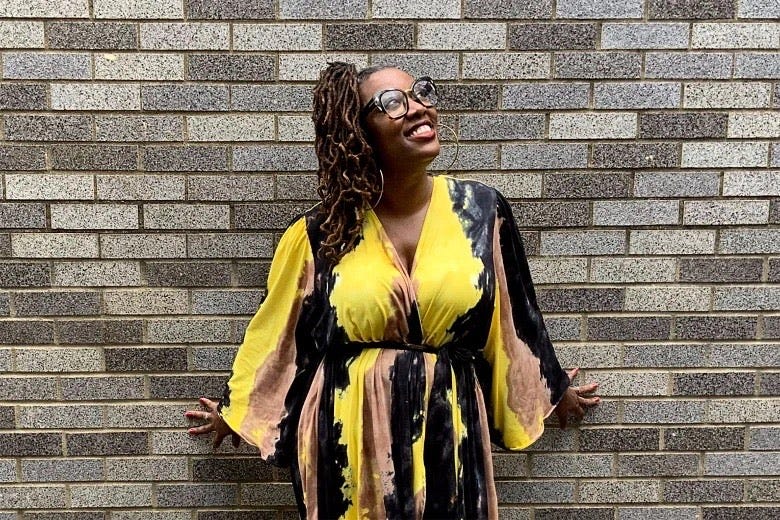
Memory is a recurring theme in our monthly writing meetings and, as we considered how memory is captured in writing, we recalled the beautifully written short story collection, The Secret Lives of Church Ladies.
For this month’s Processing, we spoke to the collection’s author, Deesha Philyaw, about how memory shows up in her writing, legacy, and forthcoming novel.
Plus, check out Deesha's suggested readings!

WC: Do you have a specific memory that you feel grounds you? Why do you call on it for stability?
Deesha: I don't have a single memory that I return to, but my happiest and most grounding memories feature my maternal grandmother, who helped my mother raise me. I remember how good it felt to hold her hand, our fingers interlocking.
I remember being around preschool and early elementary school age, and I would run outside to meet her when she came home from work, walking home from the bus stop. There's even a photo somewhere of me as a toddler, greeting her on the street outside our house. She was my favorite person.
As I got older, my relationship with my mother became more difficult and fractured, but my relationship with my grandmother was always easy and sweet. She adored me and thought I was amazing, and that's a wonderful feeling to tap into and rest in.
WC: How have you used memory as a theme in your writing? Has it been a helpful or difficult tool to use?
Deesha: So many moments in Church Ladies are drawn from memories, from nostalgia, from my longing for the complicated place (physical and emotional) where I was born and raised, from my curiosity about the complicated women in that place. Women inside and outside of the church.
In this way, memory has been a very helpful, very natural tool to use. As a theme, memory shows up most prominently in my stories, "Dear Sister" and "Jael." In "Dear Sister," the sisters have different memories and different experiences of the same wayward father, which impacts how they relate to each other. In "Jael," her fuzzy memory of her father murdering her mother is a trauma response.
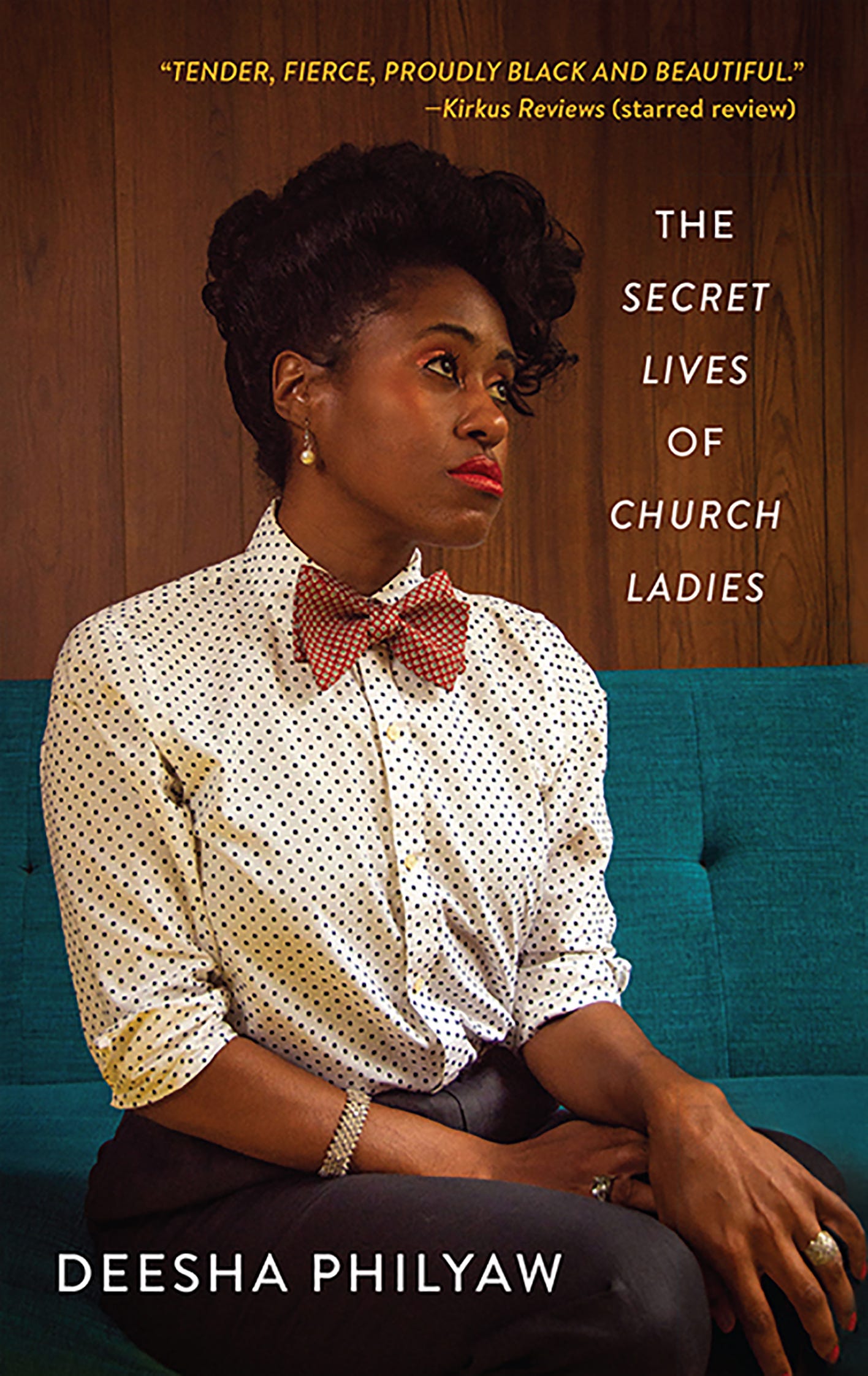
WC: One of your short stories that stood out to us is “When Eddie Levert Comes .” Specifically, the character Daughter’s ability to care for her mother, despite their scorned relationship and the dark memories she harbors.
How did you decide to write this character with empathy, and had you considered an alternative storyline?
Deesha: I wrote Daughter with my mother and my maternal grandmother in mind. They were both caretakers of their respective mothers at the end of their lives despite their mothers' hurtful failures and shortcomings as parents. And in the case of my grandmother, she cared for my great-grandmother, who had Alzheimer's.
I observed these relationships from a distance, mostly during my childhood and adolescence, and to a lesser extent as an adult, because I left home for college and only returned to visit on occasion. I felt a lot of empathy toward my mother and my grandmother in these very complicated caretaker roles.
They never said, "I resent having to take care of my mother because when I needed her most, she didn't take very good care of me," but I knew their histories, their childhoods, so I imagined there had to be some resentment, some heartache. And likely some guilt for feeling this way. And frustration and anger. All the things Daughter feels.
This was always the storyline I had in mind.
WC: Are you the first writer in your family? Have you as a storyteller set intentions to preserve any legacy (or stories) you feel should be carried on?
Deesha: To my knowledge, I'm the first writer in my family. Legacy is tricky. My stories, my mother's stories, and my grandmother's stories are woven into my fiction, to varying degrees. But I don't really write with the intention of furthering my particular family's legacy. However, because I tend to write intergenerational and multigenerational Black stories, I feel I'm contributing to the furtherance of a broader legacy. I hope I am.
WC: Who was the first Black author introduced to you that really helped solidify your writing? And what did you learn the most from them?
Deesha: I don't know if I would call it "solidifying" my writing, but reading James Baldwin, Toni Morrison, and Louise Meriwether made me want to write. But it would be decades after first reading them before I actually did.
Their writing about Black people who lived and talked like Black people I knew taught me that our stories mattered as much as anyone else's.
And Morrison taught me the thrill of writing about Black women: daring, messy, self-possessed Black women.
WC: Can you tease any themes or storylines for current projects you’re working on?
Deesha: My novel, THE TRUE CONFESSIONS OF FIRST LADY FREEMAN, is due in 2026. It's about a middle-aged megachurch pastor's wife who enters a pageant for middle-aged pastors' wives and is poised to win until a scandal breaks out involving her and another contestant's husband.
WC: Do you have any recommended reads you couldn’t get enough of?
Deesha: Yes! Let Me Liberate You by Andie Davis, Colored Television by Danzy Senna, and A Black Woman's Guide to Getting Free by Tamara Winfrey Harris are currently out.
I've also gotten advance copies of the following books that folks can pre-order: When the Harvest Comes by Denne Michelle Norris; The Grand Paloma Resort by Clevyis Natera; and First-Born Girls by Bernice McFadden.



You can follow more of Deesha’s work on Substack and Instagram.
Til next time!
writers club 🧡
sigh *adds to TBR*